Why Nigeria's Emergency Hotline Does Not Work, and What Exists Instead
Nigeria's emergency hotline exists on paper. When 112 does not answer, patients spend forty-five minutes navigating hospital rejections, cash negotiations, and informal contacts while survivable emergencies turn fatal. This is what we are building against.
Dr Somtochukwu Meribole
It was a hot afternoon in Abuja. A man held his chest and collapsed at his desk. His colleagues grabbed a phone and dialled 112, Nigeria's national emergency number, the one on government health posters, the one every Nigerian is told to call when seconds count.
The line rang, and he was put on hold for 10 minutes.
His colleagues were proactive. They hailed a commercial vehicle, found a hospital, and were turned away because there were no available beds. By the time they found a second hospital that would take him, forty-five minutes had passed.
Luckily, he survived, but many do not.
This is not an unusual story. It is a regular Tuesday in Nigeria.

The story behind 112, and why it failed
In 2014, the Nigerian Communications Commission designated 112 as the country's unified emergency number, modelled after 911 in the United States and 999 in the United Kingdom. One number, accessible from any phone, connecting callers to police, fire, and medical response. The intention was right, but the implementation never matched it.
As of 2024, Emergency Communication Centres linked to 112 were operational in 27 states, with plans to cover all 36. But having a call centre answer the phone and having an ambulance arrive are two completely different things, and the gap between those two outcomes is where people risk injury or death.
Running a functional emergency dispatch system requires more than a phone number. It requires dispatch centres staffed around the clock, trained call handlers, a coordinated ambulance network, and a system capable of routing calls and resources simultaneously. Nigeria's 112 system was designated without the operational backbone to sustain it at scale. In many states, the number goes unanswered, connects to an automated response, or reaches a centre with no capacity to dispatch anything in time. The government's own emergency body, NEMSAS, has acknowledged the problem directly, adopting multiple emergency communication numbers because, in the words of their National Programme Manager, the original line is not optimal when people are vulnerable and need to act quickly.
Even where 112 connects, dispatching an ambulance is only part of the equation. Nigeria's public ambulance capacity has historically concentrated in federal teaching hospitals, leaving large gaps across primary and secondary care zones. The federal government began equipping public hospitals with ambulances as of mid-2025, which is progress, but having the vehicles and knowing where to send them are not the same problem. And even if 112 was called and an ambulance arrived, the patient would still have to reach a hospital that requires a financial deposit before admission.
Families without immediate cash have watched relatives turned away from emergency rooms while trying to arrange a bank transfer. The ambulance getting there is step one. What happens on arrival is step two. Most emergency response thinking in Nigeria stops at step one.

What Exists Instead, and Why It Falls Short
In the absence of a reliable public system, Nigerians have built workarounds.
- Private ambulance companies operate in Lagos and Abuja on retainer contracts or on-demand dispatch. The problems are consistent: response times average 30 to 60 minutes, payment must be negotiated before the vehicle moves, and there is no integration with hospital systems. They end up solving the transport problem without solving the coordination or payment problems.
- Hospital-specific emergency services exist at a small number of tertiary facilities, primarily serving patients who can reach those hospitals directly or who are already in their system. They do not help someone who collapses on a street corner and has no prior relationship with any particular facility.
- Informal networks are the most common response. Someone collapses; a relative calls a doctor; the doctor calls a hospital; the family sends money via mobile transfer. Twenty to forty minutes pass in coordination that should take three.
All these solutions only address specific symptoms, not the disease as a whole. The common flaw across all of these is the same: they are slow, dependent on personal connections, and contingent on having cash available at the exact moment of crisis.
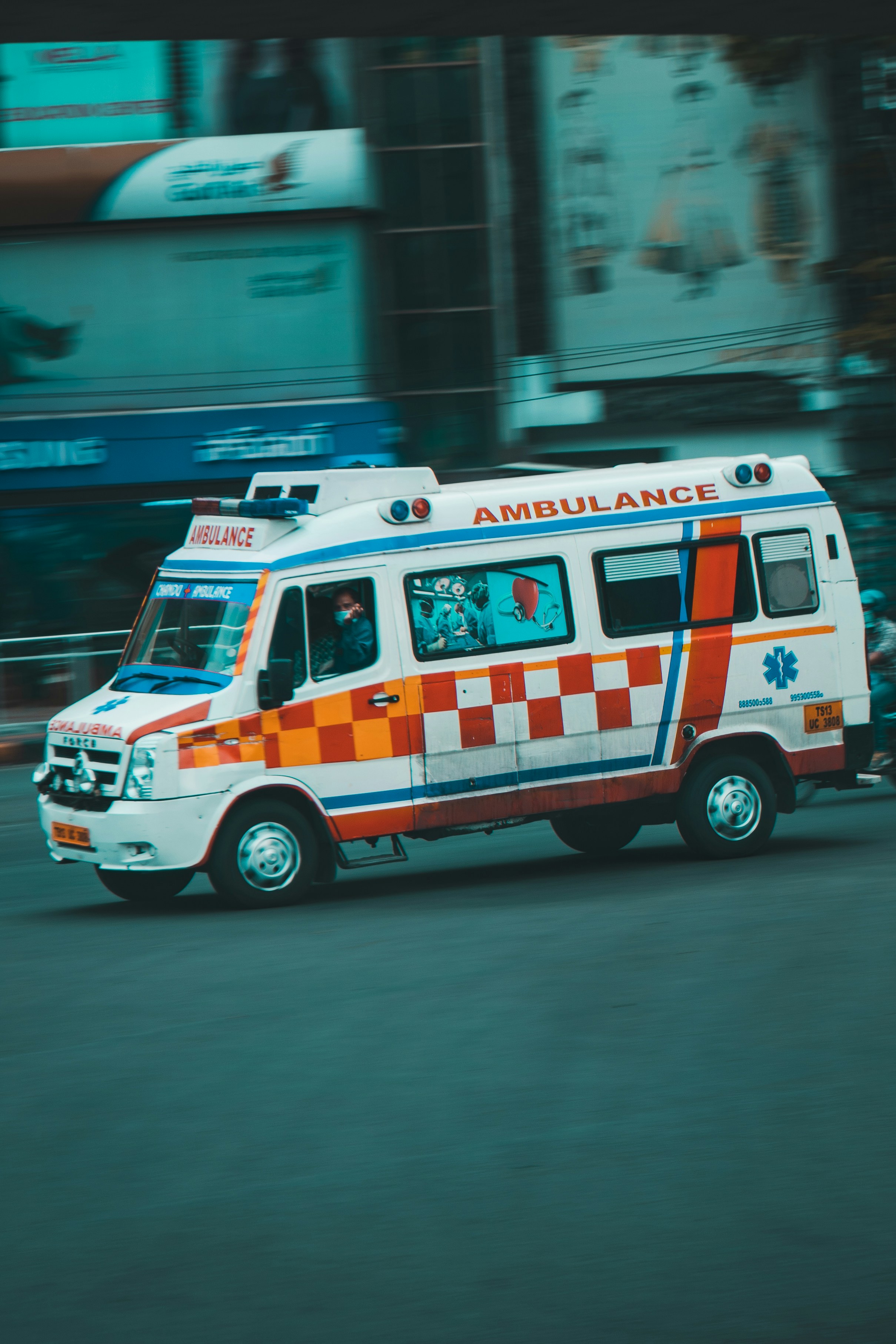
An effective emergency response system solves three problems at the same time.
1. It identifies the right hospital.
2. It gets there fast.
3. It resolves payment before arrival so care starts the moment the patient comes through the door.
This is how emergency systems work in countries where they function. Nigerian doctors and hospitals are capable of delivering good emergency care, but what they need is the coordination and payment infrastructure that connects a person in distress to the right facility with the financial friction removed.
Technology can build that layer. It is the layer the public system was designed to create but never fully delivered. And this is where FirstAI.d comes in.
FirstAI.d Technologies is building that coordination layer.
When a user triggers an SOS through the platform, the system identifies the nearest hospital with the clinical capability for the emergency type, pre-authorises payment from a corporate or individual wallet, and dispatches an ambulance before any cash changes hands. Target dispatch time is five minutes.
The hospital knows the patient is coming; payment is confirmed before anyone moves; and the family does not spend 40 minutes on the phone trying to sort out logistics while someone deteriorates.
What This Means in Practice
If you are an individual, the practical takeaway is simple: do not build your emergency plan around a number that does not reliably answer. Know which hospitals near you have emergency capacity. Know how you will pay if something happens.
Preparation is not pessimism. In Nigeria's current landscape, it is the difference between a survivable emergency and a fatal one.
The question worth asking is straightforward: what is your emergency response plan, and does it start with a number that actually gets answered?
FirstAI.d is an AI-powered emergency coordination platform operating in Abuja, Nigeria. To learn more about corporate emergency coverage, visit firstai-d.org.